NEW: Outsource your home search with Rentbird Plus!
Back to all tips

Renting in the Netherlands as an Expat: Everything You Need to Know

1 month ago
9 minutes reading time
Expat couple checking rental listings beside an Amsterdam canal lined with Dutch houses and bicycles

Finding a Rental Home in the Netherlands as an Expat


Moving to the Netherlands?

Then there’s a good chance you already know that it can be incredibly difficult to find a rental home here. The market is competitive, and even securing a viewing can be hard, as slots fill up almost immediately after a new listing comes online. 

If you’re searching from abroad, or navigating the Dutch market for the first time, it can feel even harder. 

This isn’t intended to put you off: it’s absolutely possible to find a home to rent in the Netherlands that you love, even as an expat. Many of our successful clients at Rentbird are expats. 

But to make it manageable, you do need to know how the system works.

In this blog, we’ll show you:

  • Why renting in the Netherlands feels so hard
  • What to do if you need to rent before you move to the Netherlands
  • The basics of how the Netherlands' rental market works
  • What you’ll need before you start to search for your Netherlands’ rental home
  • Common mistakes and scams that affect expats looking to rent
  • The fastest way to find a home as an expat.

Why renting in the Netherlands feels so hard

The Netherlands has a major housing shortage, with demand especially high in cities like Amsterdam, Utrecht, Rotterdam, and The Hague. Exactly the places that expats usually need to rent. 

Properties in these popular cities, especially in the vibrant, central areas you probably want to live, go fast, and it’s especially hard to get a viewing. 

Even if you do, landlords can afford to be selective as they have so many people to choose from, which can disadvantage expats. You don’t know the system yet, you don’t speak the language and you might be seen as a more ‘difficult’ person to rent to than a local. 

Landlords might think that your paperwork is less likely to be straightforward, or that you’re less likely to want to stay long-term. It’s frustrating, but not insurmountable.

If you want to understand more about why renting in the Netherlands is difficult, check out this blog.

Can you rent before you move to the Netherlands?

Yes potentially, but it’s difficult, because:

  • Landlords tend to prefer tenants already living in the Netherlands, because they can attend viewings in person and meet the landlord, which is reassuring for them. Video viewings are possible though, and some expats do manage to rent by using them.

  • You’ll usually need to provide Dutch documents including your local employment history, details of your Dutch bank account, and your BSN.

The BSN (or citizen service number) is similar to a social security number. You’ll get it when you register with the Dutch authorities, and most landlords will want to see it before you sign a rental agreement. 

Naturally, you’re unlikely to have any of these things if you’re not yet living in the Netherlands. Which means that it’s generally far easier to secure a short-term let first, and then look for your long-term rental home once you’re here. 

How the Dutch rental market works

The rental market in the Netherlands moves fast. Properties are listed in sites like Funda and Pararius, and viewings will often fill up the same day. 

This means that:

  • You need to act fast. If you don’t contact the landlord within hours, you’ll often miss out on a viewing. This is frustrating if you’re relying on manually searching Funda, as it’s impossible to spend 24 hours a day refreshing listings.

That’s why at Rentbird, our AI search bots send instant matches 24/7, so you can book viewings immediately. 

  • You need to be prepared. With all your relevant documents and proof of income ready to show the landlord. If you don’t have this, they’re likely to just move on to the next person – however much they might have liked you.

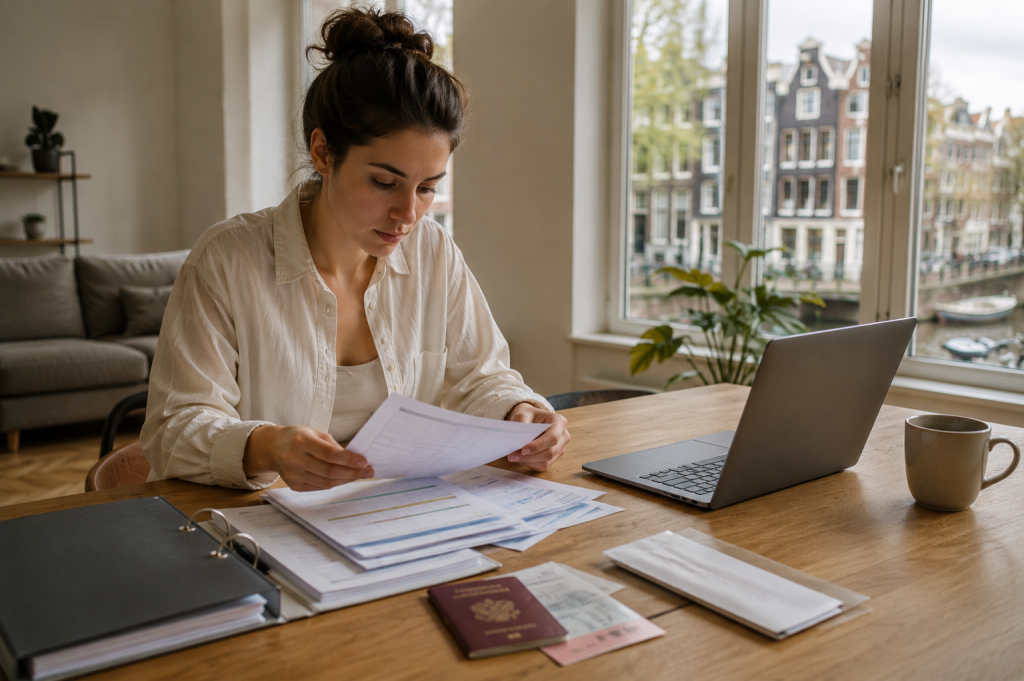
Expat organizing rental documents in a modern Amsterdam apartment while preparing to apply for housing in the Netherlands.

What you need before you start your rental search in the Netherlands

Don’t wait until you have a viewing to gather these. It’s vital that you’re able to make yourself an attractive tenant who’s easy to rent to. 

Gather together:

  • Proof of your identity. Usually, a passport, though EU citizens can sometimes use an ID card. 

  • Proof of your income. If you’re employed, this would usually include your employment contract and recent payslips. If you’re self-employed, you might need to show your tax return. 

What if you’ve just started a new job? Then be ready to provide proof of savings and other recent income.

You should also be prepared to show recent bank statements (even if you have proof of employment). 

You’ll usually need to show an income of at least 3x the monthly rent, sometimes more.

  • If you’re not an EU citizen, your residence permit. You’ll need this to show that you have the right to live and work in the Netherlands. 

  • Rental references from previous landlords. If you own a property in your home country rather than renting, you might not have these. Don’t panic – just explain this to the landlord. 

It’s a good idea to create a folder (either physical or digital or both) with everything your landlord might ask for ready to go. 

Common mistakes expats make when renting in the Netherlands

1. Not realising that the advertised rent isn’t always the whole cost

Service fees are sometimes charged in addition to the rent, covering things like cleaning and maintenance of communal areas. 

Utilities like electricity and water are also rarely included in the rent. 

Expats are sometimes caught out by these fees, as in some countries, they would typically be included in the rent. If you’re unsure, always ask and double check the contract. 

2. Falling for rental scams and illegal fees

If the landlord asks for money up front without a contract, that’s an immediate red flag. There can sometimes be a holding fee, but if there is, this should be taken off your first month’s rent – and you should make sure you have this in writing. 

You should also never be asked to pay more than the equivalent of 3 months’ rent as your security deposit. That is the legal maximum amount. 

Always be cautious if the landlord is in any way evasive or unwilling to share a contract or put anything in writing. These problems aren’t exclusive to expats, but if you don’t know the local laws, you can be more vulnerable. 


3. Being too picky or slow to make a decision

You should be in a position to make a quick decision if you find a place you like, as the landlord won’t wait around for a week while you decide. This doesn’t mean that you should feel rushed, but it does mean that you should be clear before you start on:

  • What your maximum budget is.

  • What areas you would be willing to live in (taking into account transport time and costs as well as things like proximity to nightlife or childcare). This can be tricky as an expat in a new city, but it’s worth figuring out so you don’t waste time.

  • What your must-haves are, and what you can compromise on. Is a second bedroom a nice-to-have or an essential, for example?

Being totally clear what your limits are means you can find what you need faster, without restricting your search too much. It’s worth being as flexible as you can though – especially if you want to move fast. 
How to find a Netherlands rental home faster as an expat

Most Rentbird users find a home in 4-8 weeks, thanks to:

  • AI search bots that work 24/7 to find home matches for you and send instant alerts to your phone.
  • AI-generated response letters that allow you to arrange a viewing in 2 clicks, so you don’t miss out. 
  • The ability to set up to 4 searches, so you can see what’s available easily in different areas (perfect if you’re new to the country). 

If you choose Rentbird Plus, our local experts will even arrange the viewings for you, negotiate a fair price and check the contract over. All you need to do is turn up to the viewing. This is ideal for expats who are short on time and struggling to get to grips with the Dutch rental market. 

Stef van Vliet
CEO

Related tips

Back to all tips

Find your new rental property in no-time!

4.7