10 red flags to check before you respond
Work through this list before engaging with any listing you're not 100% sure about.
1. The price is significantly below market rate. Compare the listing to similar properties on Pararius, Funda, or Kamernet. If it's more than 20 to 30 percent cheaper with no obvious explanation, be suspicious.
2. The landlord is "abroad" and cannot meet in person. This is one of the most common scam scripts. "I'm currently working in London / Spain / the US and I'll post you the keys once you've paid the deposit." No legitimate landlord operates this way.
3. You're asked to pay before viewing the property. Whether it's €100 for a "reservation fee", €400 to be the "only applicant", or a full deposit upfront: a legitimate landlord will never ask you to pay anything before you've physically visited the property.
4. Payment is requested via unusual methods. Bank transfer to a private account in a different country, Western Union, cryptocurrency, or gift cards. These are untraceable and unrecoverable. Legitimate landlords use standard Dutch bank transfers.
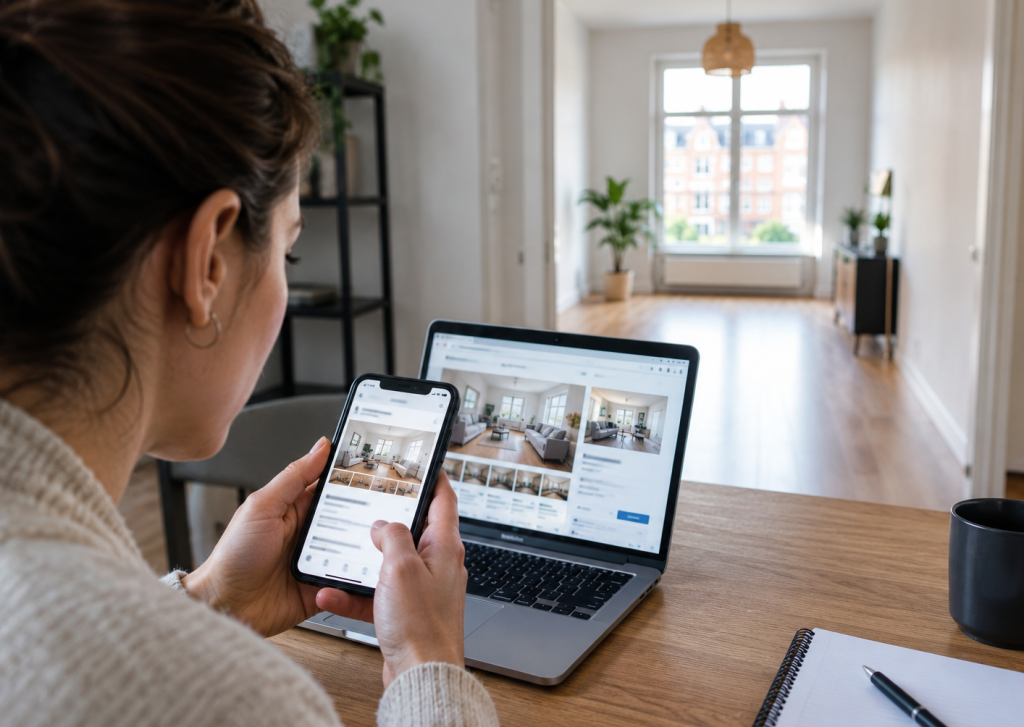
5. The listing photos appear on other platforms. Scammers steal photos from legitimate listings on Funda, Airbnb, or international real estate sites. Copy the image URL and run a reverse image search on Google to see where else those photos appear. If the same living room shows up in two different cities at two different prices, it's a scam.
6. The contract or documents look off. Grammar mistakes, inconsistent formatting, a landlord name that doesn't match the documents, or a contract that looks like it was assembled from a template. If you're unsure, the Huurcommissie or a legal advice desk can help you check.
7. The "landlord" references Airbnb as a safety mechanism. A common tactic: the scammer suggests completing the transaction via "Airbnb's long-term rental safety programme." They send a link to a website that looks identical to Airbnb. It isn't. Real landlords don't use Airbnb for long-term rentals, and Airbnb takes 14 to 16 percent of every booking. No rational landlord would volunteer that.
8. You cannot register at the address (inschrijven). In the Netherlands, you're legally entitled to register at any address you rent. If a landlord says you can't register there, something is wrong. It may be an illegal sublet, a property that doesn't legally exist as a rental, or simply a scam.
9. Communication only happens via WhatsApp or email. Scammers avoid phone calls and video calls because they can't maintain a believable story under real-time questioning. If every attempt to speak on the phone or video call is deflected, take note.
10. The listing is only on social media or unmoderated platforms. Facebook groups, Marktplaats, and Instagram are largely unmoderated. Scammers post there precisely because no one is checking. This doesn't mean every listing there is fake, but listings that exist only on these platforms warrant extra scrutiny.