NEW: Outsource your home search with Rentbird Plus!
Back to all tips

What's a reasonable rent to pay in a Dutch city?

2 months ago
8 minutes reading time
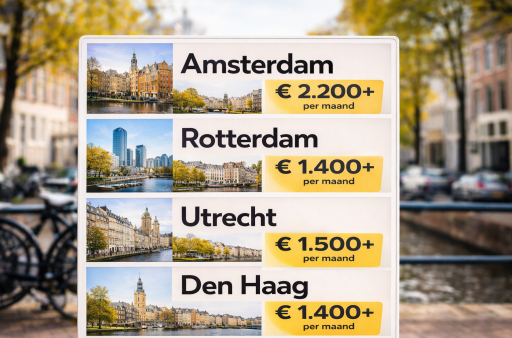
Dutch city rent comparison showing average prices in major cities

What's a reasonable rent to pay in a Dutch city?

Let’s state the obvious: Dutch rental prices are high. And they’re continuing to rise, climbing 4.9% in 2025, and 5.4% in 2024. 

If you’ve tried to rent a property in any Dutch city recently, you’ll know this only too well. Even in cheaper cities, you’re likely to pay at least €600 for a room in a shared house. If you need a one-bedroom apartment, you’ll pay €1500 or more. In Amsterdam, you’ll pay even more than this, with one-beds coming in at around €2000. 

The rental price bargain

This means that renting becomes a process of bargaining with yourself. You’ll look at a €1500 apartment and think ‘is that really all I get, for that money?’. 

Maybe you’ll revise your expectations. You’ll look at studios instead of one-beds, even though it means you and your partner will be tripping over each other.. Or you look at places out of the city, despite the long travel times and the impact on your sleep and social life. Or you go for the place you want, and accept that the higher rent you’ll pay means your budget will be stretched thin every month, with little spare for savings and holidays. 

The reality of high rents means compromises are normal. The trick is to find a compromise you can live with: a rental price that doesn’t leave you struggling for money, and a home you enjoy living in (even if it’s not perfect). 

To make those compromises, you need to understand what is actually a reasonable rent, and what’s an unreasonably inflated rent, even in this highly competitive market. 

How the Dutch rental market looks, city by city

Amsterdam

In Amsterdam, expect to pay around €2200 per month for a one-bedroom apartment in desirable central neighbourhoods, or around €1800 in outer areas. 

Studios range from €1200-1800, and two/three beds from €3000-€4500.

Rotterdam

Rotterdam is more affordable, although prices are rising faster here than elsewhere. 
Expect to pay €1300 to €1600 for a one bed, €800 – €1400 for a studio, and €1800 – €2800 for a two/three bed.

Utrecht

Utrecht's prices sit somewhere between Rotterdam and Amsterdam. 
One-bedroom apartments average €1400-€1700, studios €900 – €1600 and two/three beds €2,200 – €3200.

The Hague

The Hague is priced similarly to Rotterdam for studios and one-beds, but you’ll pay a little more for a two or three bed, with prices starting around €2000.

How to tell if a rent is reasonable

There are several factors that influence the rent you’ll pay. Some of these might be very important to you, others may not matter at all. 

For example, you might be really keen to live somewhere central, with a good atmosphere and lots to do. You know this means paying more rent, but you’re willing to do so. For you, a ‘reasonable rent’ will look different in the kind of busy, central area you want compared to a quiet, out-of-town area. 

  • Location

Rental prices are heavily influenced by location more than anything else, with historic, central areas nearly always more expensive than quiet, residential neighbourhoods. In Amsterdam, properties within the canal belt or close to Amsterdam Centraal station command some of the highest rents in the country. 

What’s reasonable? If central rents are too much, look at suburban areas or smaller nearby towns. You could save as much as 20-40% on rent if you live on the outskirts, compared to the city centre.

But make sure you factor in any commuting costs, as these can quickly eat into your savings on rent. You’ll also find that well-connected areas near train stations and high-frequency tram routes aren’t always especially cheap, so you may not save as much as you think. Do the math on rent vs travel before you commit. 

  • Property size and condition 

Naturally, a compact 50 m² studio in central Amsterdam will cost substantially less than a 90 m² one-bedroom apartment in the same area. The property’s condition, decor and energy label will also have an impact. 

You might be tempted to take a shabbier-looking two-bed apartment over a pristine, modern one-bed. But bear in mind that this might mean higher energy bills, and potentially a lot of frustration if the landlord doesn’t maintain it well. 

Also consider the age and type of building. Modern apartment complexes and historic character properties can both be more expensive than other properties of a similar size.

  • Amenities and furnishing 

Furnished apartments are common in expat-heavy markets like Amsterdam and The Hague and are usually 10-20% more expensive than unfurnished. If you are able to furnish your own place, it usually makes sense to do so, given the rental savings. 

Also check whether the property you want comes with any utilities included (such as gas, water, electricity, and internet). Usually, you’ll pay separately, but it’s worth looking past the headline rental price, just in case. 

You’ll also often pay more for apartments with outside space or on-site facilities like gyms and bike storage. If you don’t need the gym, make sure you’re not accidentally paying extra rent for it. 

What if the price seems too reasonable?

Sadly, not all rental listings are legitimate, and one of the most common red flags is a suspiciously low price. If it’s significantly cheaper than similar properties, it might be a scam. Fake ‘landlords’ are known to list non-existent properties, in the hope of getting you to pay a deposit. 

Also be cautious of any request for payment by an unusual method, such as cryptocurrency or a foreign bank account. Never pay for a property that you haven’t seen, or give into pressure – however good the property (and its price) might sound.
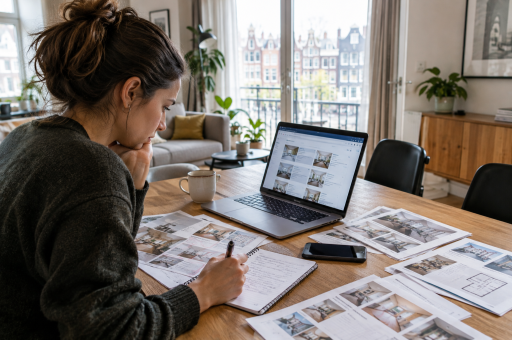
couple sitting on a couch, checking apartment listings, comparing options to find a suitable rental within their budget

Finding the property that works for you and your budget

In our competitive rental market, it can be difficult to think clearly about what you really want, and what feels reasonable and affordable. 

Don’t panic. It’s all too easy to end up taking a property that you don’t like, in an area you hate, because you were starting to feel desperate. Even if the rent is (relatively) cheap, you’ll end up stuck and regretful. 

Instead, make sure you’re prepared. Make 2 lists:
  1. Your absolute limits and must-haves, in terms of price, location, travel time to work and size. 
  2. Your nice-to-haves. For example, a balcony, or second bedroom. 

If you’re clear on these, you’ll be much better able to work out whether the rental price asked for is reasonable for you. 

It also usually makes sense to compare multiple properties rather than accepting the first one you see. This gives you a much better idea of reasonable market rates across properties, even if it does feel like you’re wasting time. 

Finally, be ready to pounce once you’ve found the place that’s right for you. Have your proof of income, identification, and references ready to go. Delays often mean losing out, since landlords have so many candidates to choose from. 

Want a little help to find the right place?

With Rentbird, you’ll get property matches in your price range sent to you within 30 seconds of them being advertised. When you do find a match, you can apply for a viewing in a couple of clicks. 

Stef van Vliet
CEO

Related tips

Back to all tips

Find your new rental property in no-time!

4.6